_edited.png)
.png)
%20(3000%20x%201000%20px)%20(100%20x%2050%20px)%20(1).jpg)
Nobody Told Me About Perimenopause Until My Body Started Changing
- Maya Ellis

- Jun 3
- 6 min read
Updated: Jul 6

For most of my life, I thought menopause was the main thing women had to prepare for.
That was the word I heard.
Menopause.
I heard it talked about like it was one event.
You got older, your period stopped, had some hot flashes, and somehow pushed through it.
That was about all I remember getting.
Nobody sat me down and said, “Before menopause, there may be years where your body starts changing and you may not understand why.”
Nobody told me about perimenopause.
Nobody told me I could still be having periods and still feel like something in my body had shifted.
Nobody told me sleep could change, my moods could feel different, my patience could get thinner, my anxiety could show up out of nowhere, and my energy could feel like somebody unplugged me in the middle of my regular life.
And that is the part I wish more women talked about.
Because when you don’t know what is happening, you start blaming yourself.
You think maybe you’re lazy.
Maybe you’re stressed.
Maybe you’re eating wrong.
Maybe you’re not disciplined enough.
Maybe you’re just getting older and need to accept it.
I know what it feels like to wake up at 3 a.m., stare at the ceiling, and feel tired before the day even starts.
I know what it feels like to walk into a room and forget why you went in there.
I know what it feels like to look in the mirror and feel like your body is familiar and unfamiliar at the same time.
That can mess with a woman.
Not because we are vain.
Not because we are weak.
But because our bodies carry so much of our lives.
So, when it begins to change, it can feel personal.
What I’ve learned is that perimenopause is the transition before menopause.
Menopause itself is when a woman has gone twelve full months without a period.
The years leading up to that are perimenopause, and the years after are post menopause.
That sounds clear when it’s explained like that, but living through it can feel like a whole different conversation.

Perimenopause can begin at different times for different women.
Some women notice changes in their thirties.
Many notice them in their forties.
Some don’t connect the dots until later because the symptoms don’t always come in a neat little package.
That is what makes this season so confusing.
We know about hot flashes.
Most of us have heard about those.
But perimenopause can also come with irregular periods, heavier or lighter bleeding, night sweats, sleep problems, mood changes, anxiety, brain fog, forgetfulness, headaches, joint aches, weight gain around the middle, lower energy, changes in desire, and that strange feeling of not quite feeling like yourself.
Some women may only notice a few changes.
Some women feel like their whole body changed the rules without telling them.
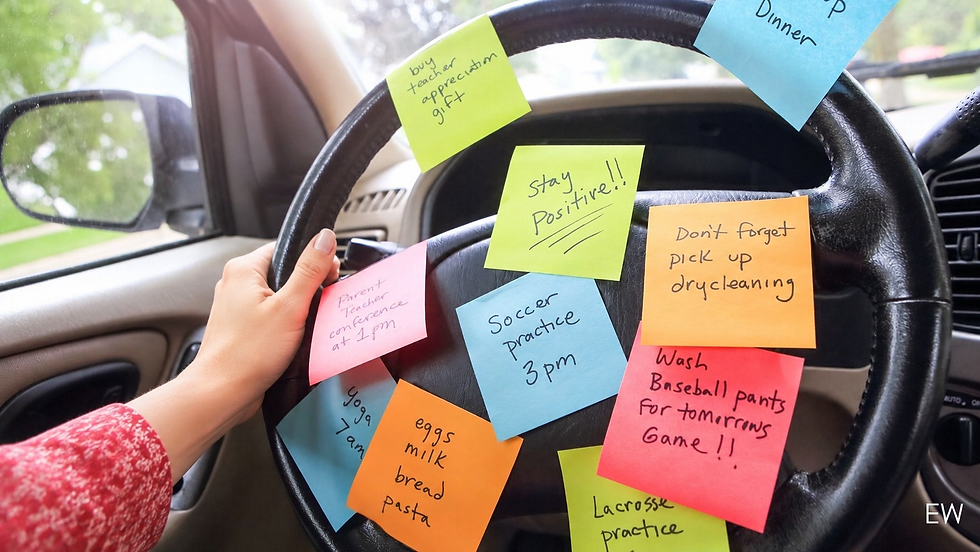
And because women are so used to pushing through, many of us keep trying to handle it quietly.
We show up to work tired.
We answer everybody’s questions while our own thoughts feel scattered.
We take care of everyone else while we feel like we are losing our grip on ourselves.
We smile through the mood swings.
We apologize for being emotional.
We call ourselves dramatic when our body may actually be trying to get our attention.
For me, one of the biggest mindset shifts has been this:
My body isn’t betraying me.
It is changing.
That one sentence helped me breathe differently.
Because I spent a lot of my life thinking every struggle meant I had to push harder.
If I was tired, I needed to do more.
If I gained weight, I needed more discipline.
If I felt emotional, I needed to get myself together.
If I felt overwhelmed, I needed to be stronger.
But this season has taught me that strength is not always pushing.
Sometimes strength is listening.
One thing that has helped me is walking.
Not a perfect workout plan.
Not a strict program.
Not me trying to turn into a completely different woman by Monday morning.
Just walking.
Fifteen to thirty minutes a day feels like something I can actually do.
I don’t need a gym membership.
I don’t need fancy equipment.
I don’t need to be in perfect shape first.
I can walk outside, around my neighborhood, through a store, on a trail, or wherever life allows that day.
Walking helps me feel like I am coming back into my body instead of fighting against it.
It gives my mind room to settle and reminds me that taking care of myself doesn’t have to be complicated to count.

And for women in perimenopause and menopause, movement matters.
Regular movement can support heart health, mood, sleep, weight, bones, and stress.
That doesn’t mean walking fixes everything.
It doesn’t.
But it can be one gentle way to support a body that is already carrying a lot.
I’ve also learned that protein matters more than I used to think.
As we age and our hormones change, our muscles need support.
Strength training can help protect muscle and bone health too.
That doesn’t mean every woman has to become a weightlifter.
It can be body weight exercises, resistance bands, light weights, or whatever is safe and realistic.
Sleep matters too, even though sleep can be one of the first things that gets messy.
A regular bedtime routine, less late-night scrolling, a cooler room, and giving your body time to wind down may not fix every night, but it can give your body a better chance.
Food matters.
Stress matters.
Water matters.
Rest matters.
Saying no matters.
Asking for help matters.
Sometimes natural choices help.
Sometimes they are not enough.
If symptoms are interfering with your life, your work, your sleep, your mood, your relationships, or your ability to function, that deserves attention.
If you are dealing with heavy bleeding, bleeding after sex, bleeding after menopause, severe anxiety, depression, chest pain, or symptoms that scare you, please talk with a doctor.
We don’t get extra points for suffering in silence.
We don’t have to wait until we break down before we ask questions.

Perimenopause and menopause are not just body changes.
They can touch a woman’s confidence, relationships, work life, motherhood, faith, identity, and the way she sees herself.
For one woman, it may feel manageable.
For another woman, it may feel like the ground moved under her feet.
Both experiences are real.
That is why this conversation matters.
When women don’t know what is happening, we can spend years feeling confused or alone.
But when we start talking about it, we give each other language, relief, and permission to stop pretending everything is fine when it isn’t.
I wish someone had told me sooner.
I wish someone had said, “Your body may change before your period stops.”
I wish someone had said, “You’re not losing your mind.”
I wish someone had said, “Pay attention. Ask questions.
Take care of yourself now, not later.”
So I’m saying it here.
If you feel different and you can’t quite explain it, you are not making it up.
If your body feels unfamiliar, you are not alone.
If you are tired of being tired, tired of forgetting things, tired of waking up at night, and tired of feeling like your emotions are closer to the surface, there may be a reason.
And even if perimenopause is not the reason, your symptoms still matter.
That is the unspoken truth for many women.
We wait too long to take ourselves seriously.
We will make appointments for everybody else.
We will notice when our children seem off.
We will remind people we love to take care of themselves.
But when our own body starts waving a flag, we call it inconvenience.
I don’t want to do that anymore.
Menopause has made me accept that I can’t keep treating my body like it is still twenty years ago.
I can’t keep expecting the same body to carry more and more while receiving less and less care.
That is not failure.
That is wisdom.
This season is not asking me to hate my body.
It is asking me to listen to it.
It is asking me to become more honest about what I need.
It is asking me to stop measuring myself by who I used to be and start caring for the woman I am now.
And maybe that is where many of us are.
We are not falling apart.
We are being asked to pay attention.
Our bodies were never meant to be ignored forever.
At some point, they speak louder.
This time, I’m listening.


Comments