_edited.png)
.png)
%20(3000%20x%201000%20px)%20(100%20x%2050%20px)%20(1).jpg)
7 Signs Your Life Is Out of Balance (And How to Fix It)
- Maya Ellis

- Jun 1
- 9 min read
Updated: Jul 6

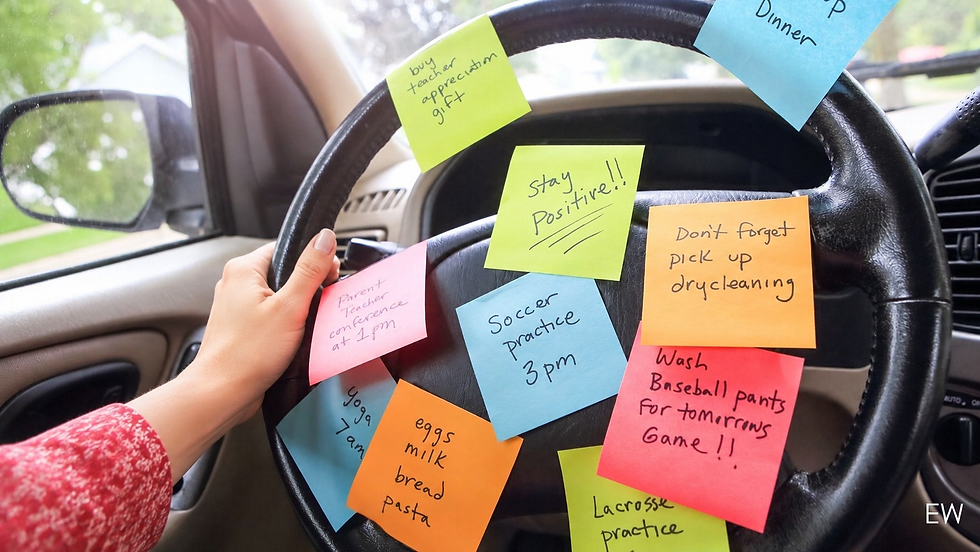
There was a time in my life when I thought being overwhelmed was just part of being a responsible woman.
I was working, raising children, managing a household, making decisions, keeping up with everybody’s needs, and trying to hold myself together at the same time.
From the outside, I probably looked fine.
I showed up.
I handled things.
I kept moving.
But inside, I was tired in a way I didn’t know how to explain.
It wasn’t the kind of tired where a nap fixes everything.
It was the kind of tired that follows you from room to room.
The kind that makes small things feel heavy.
The kind that makes you sit in your car for a few extra minutes because walking into the house feels like another job.
At the time, I didn’t call it imbalance. I called it life.
That’s the part we don’t always notice as women.
We get so used to pushing through that we stop questioning whether the way we’re living is actually working for us.
We start thinking stress is normal.
Exhaustion is normal.
Feeling disconnected from ourselves is normal.
Giving everyone else the best of us and living off the leftovers is normal.
But it’s not.
Life doesn’t always wave a big red flag in our face.
Sometimes the signs are quiet.
We lose our patience.
We stop doing the things we enjoy.
We wake up tired.
We feel irritated over things that usually wouldn’t bother us.
We look around one day and realize we’ve been functioning, but we haven’t really been living.
If you’ve been feeling off lately, but you can’t quite explain why, your life may be asking for attention.

1. You Feel Constantly Exhausted
I’m not talking about feeling tired after a full day or a busy week.
I’m talking about waking up already drained.
You open your eyes and your mind is already running.
You’re thinking about what needs to be done, who needs something from you, what you forgot yesterday, and what you have to handle today.
Before your feet even touch the floor, you already feel behind.
That kind of exhaustion is different.
When life is out of balance, our bodies often tell the truth before our mouths do.
We may ignore how stressed we are, but our bodies don’t.
The headaches, the tight shoulders, the restless sleep, the low energy, the brain fog, the short temper, all of it can be a sign that we’ve been carrying too much for too long.
For me, exhaustion became so normal that I almost stopped noticing it.
I thought I was just busy.
I thought I just needed to be stronger.
But sometimes tired isn’t weakness.
Sometimes tired is information.
How to fix it:
Start by paying attention to what drains you the most.
Is it your job?
The mental load at home?
Worrying about everybody else?
Lack of sleep?
Saying yes when you already want to say no?
Trying to be available for everyone all the time?
Instead of asking, “How can I do more?” start asking, “What can I stop carrying?”
You may not be able to change everything today, but you can begin with one thing.
Go to bed earlier one night.
Let a task wait.
Ask for help.
Sit down without guilt.
Stop treating rest like something you have to earn after you’ve given every piece of yourself away.
Sometimes balance starts with admitting, “I’m tired, and I need to care about that.”

2. Work Is Taking Over Your Entire Life
I understand responsibility.
I’ve spent years in management and leadership spaces, so I know what it means to have people depending on you, problems waiting for you, and decisions that can’t always be pushed aside.
But I also know what happens when work starts following you everywhere.
You think about work while you’re cooking dinner.
You check messages when you’re supposed to be relaxing.
You replay conversations in your head long after the day is over.
You wake up thinking about emails, deadlines, meetings, or the next issue that needs fixing.
Before you know it, work has taken up space in your home, your mind, your mood, and your relationships.
And the hard part is, many of us don’t notice it at first because being dependable can feel like part of our identity.
We tell ourselves, “This is just what I have to do.”
But when your job starts getting your thoughts, your energy, your evenings, your weekends, and your peace, something has shifted.
Your work matters, but so do you.
How to fix it:
Create a real ending to your workday.
That may mean closing your laptop and leaving it closed.
Turning off work notifications after a certain time.
Changing clothes when you get home so your body knows the workday is over.
Taking a walk before jumping into home responsibilities.
Giving yourself ten minutes to breathe before everybody starts needing something.
You may also need to ask yourself a deeper question.
“Am I working this much because I have to, or because I don’t know how to stop proving myself?”
That one can sting a little, but it’s worth asking.
Your job can be an important part of your life, but it shouldn’t swallow your whole life.

3. You No Longer Make Time for Yourself
This was one of the biggest signs for me.
I wasn’t reading.
I wasn’t walking.
I wasn’t doing things that made me feel calm, creative, happy, or connected to myself.
I had become so focused on everyone else that my own needs started feeling like extra work.
And what’s sad is, I didn’t even realize how much I missed myself.
A lot of women understand this.
We make time for appointments, school events, work tasks, groceries, family needs, phone calls, emergencies, and everybody’s feelings.
But when it comes to us, suddenly there’s no time left.
The truth is, sometimes we don’t lose ourselves all at once.
We lose ourselves in small moments we keep giving away.
We stop doing the things we love.
We stop checking in with ourselves.
We stop asking what we need.
We tell ourselves we’ll get back to us later.
But later can turn into years.
How to fix it:
Start small enough that it feels doable.
Take fifteen minutes for yourself.
Read a few pages of a book.
Sit outside with coffee or tea.
Take a walk around the block.
Listen to music that reminds you of who you were before life got so loud.
Write one honest sentence in a journal.
It doesn’t have to be big to matter.
The goal is not to add another task to your list.
The goal is to remind yourself that you are still a person with needs, interests, feelings, and dreams.
You don’t need a full free day to reconnect with yourself.
Sometimes you just need one small moment that belongs to you.

4. Your Relationships Feel More Difficult Than Usual
When life gets out of balance, relationships can start feeling heavier than they really are.
You may find yourself snapping over small things.
Getting irritated faster.
Pulling away from people you love.
Feeling like every conversation takes too much energy.
You may be physically in the room, but mentally somewhere else.
Sometimes we think our relationships are the problem when really, our nervous system is overloaded.
That doesn’t mean other people can’t be difficult.
Let’s be real, some people absolutely can be.
But when we’re exhausted, stressed, and stretched too thin, even normal conversations can feel like too much.
I’ve had seasons where I wasn’t responding from peace.
I was responding from pressure.
I wasn’t always reacting to what was happening in that moment.
I was reacting from everything I had been carrying all day.
And that matters.
How to fix it:
Pause before you respond.
Ask yourself, “Am I upset about this, or am I already overwhelmed?”
Put your phone down when someone is talking to you.
Take a breath before answering.
Say, “I need a minute,” instead of forcing yourself to keep going when you’re already at your limit.
Also, give yourself grace.
Being out of balance doesn’t make you a bad person.
It means you need room to breathe.
A little more presence can soften a lot of tension.
Not every relationship needs a big conversation.
Sometimes it needs more honesty, more rest, and less reacting from a place of emotional overload.

5. Your Mental Health Feels Heavier Than Normal
There was a season in my life where everything felt harder than it should have.
Small decisions felt overwhelming.
Normal tasks felt like too much.
I could still function, but I didn’t feel okay inside.
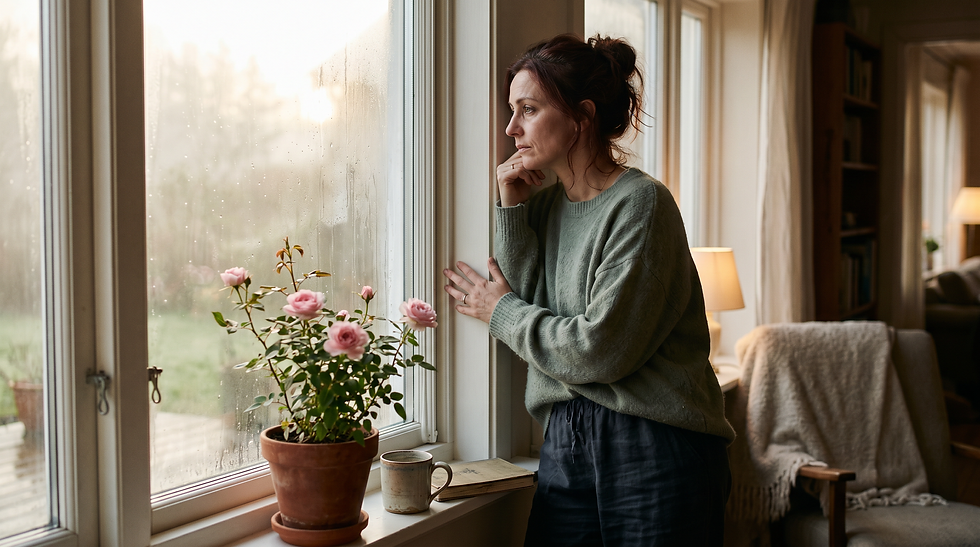
I wasn’t falling apart in a loud way, but I was carrying a quiet heaviness that followed me through the day.
That’s something many women know too well.
Sometimes we’re not crying all the time.
We’re not in bed all day.
We’re still showing up, still answering messages, still taking care of people, still doing what needs to be done.
But inside, we feel anxious, numb, irritated, sad, disconnected, or mentally worn out.
Mental overload can be sneaky because we often normalize it.
We tell ourselves we’re just busy.
We say we’ll feel better after this week, after this deadline, after this situation calms down.
But if everything always feels heavy, it’s worth paying attention to.
How to fix it:
Listen to what your mind has been trying to tell you.
Write your thoughts down. Talk to someone safe.
Step away from noise when you can.
Take breaks from things that constantly feed your stress.
Give yourself permission to say, “I’m not okay right now, and I need support.”
And if you feel like the heaviness is too much to carry alone, professional help can be a strong and wise step.
There’s no shame in needing support.
We weren’t created to carry everything by ourselves in silence.
Sometimes the strongest thing we can do is stop pretending we’re fine.

6. Your Family Gets Whatever Energy You Have Left
This one was hard for me to admit.
The people I loved most were sometimes getting the most exhausted version of me.
The distracted version.
The short answer version.
The version that had given so much energy to work, responsibilities, problems, and everybody else that there wasn’t much left by the time I got home.
I was there, but not always fully there.
That realization hurt because I loved my family.
But love doesn’t always mean we’re present.
Sometimes we can love people deeply and still be too drained to connect with them the way we want to.
And women carry guilt over this.
We feel guilty for being tired.
Guilty for needing quiet.
Guilty for wanting space.
Guilty for not having endless patience.
But guilt doesn’t fix imbalance.
Awareness does.
How to fix it:
Protect small moments of connection with your family.
Have dinner together without phones.
Take a walk together.
Sit in the same room and talk for a few minutes.
Ask one real question.
Give a hug without rushing.
Laugh about something small.
Let your family experience the present version of you, not just the responsible version.
You don’t always need more time.
Sometimes you need better use of the time you already have.
And you also need to refill yourself so your family doesn’t always get what’s left after the world is done with you.

7. You Can't Remember the Last Time You Felt Like Yourself
This may be the biggest sign of all.
You wake up one day and realize you don’t know who you are outside of what you do for other people.
You’re the mother.
The employee.
The caregiver.
The partner.
The helper.
The strong one.
The dependable one.
The one everybody calls when something needs to be handled.
But somewhere in all of that, you stopped feeling like you.
Believe me I know how that feels.
I lived that feeling.
And it can be lonely because from the outside, people may still see you functioning.
They may still see you showing up.
They may still think you’re fine.
But inside, you’re wondering, “Where did I go?”
That question can feel painful, but it can also become the beginning of your way back to yourself or finding yourself for the first time.
How to fix it:
Ask yourself, “What made me feel alive before life got so busy?”
Maybe it was writing.
Walking.
Gardening.
Dancing in the kitchen.
Decorating your space.
Reading.
Laughing with friends.
Traveling.
Learning something new.
Getting dressed for yourself.
Sitting in quiet without feeling guilty.
Start there.
You don’t have to become a whole new person overnight.
You may just need to return to the pieces of yourself that got buried under responsibility, survival, stress, and everyone else’s needs.
Balance doesn’t always mean everything gets equal time.
Sometimes balance means you stop leaving yourself out of your own life.
Looking back, I can see that my life didn’t become unbalanced in one big dramatic moment.
It happened one responsibility at a time.
One yes at a time.
One ignored need at a time.
One season of survival at a time.
One moment of telling myself, “I’ll deal with me later.”
But the beautiful thing is, we can begin again one choice at a time too.
One boundary.
One honest conversation.
One quiet morning.
One walk.
One earlier bedtime.
One moment where we pause and ask, “What do I need right now?”

If you recognized yourself in some of these signs, you’re not alone.
So many women are walking around tired, overwhelmed, and disconnected while still looking like they have everything under control.
But just because you can carry it doesn’t mean it isn’t heavy.
Your life may not need a complete overhaul today.
It may just need your attention.
Your honesty.
Your willingness to admit that something has to shift.
Balance doesn’t mean life will always feel calm. It means you matter inside the life you’re building.
And maybe that’s where healing begins.
Not with fixing everything at once, but with finally choosing to stop disappearing from your own life.

Comments