_edited.png)
.png)
%20(3000%20x%201000%20px)%20(100%20x%2050%20px)%20(1).jpg)
Growing Older Alone Can be More Frightening Than Most Women Admit
- Maya Ellis

- Aug 27
- 7 min read

Sometimes a thought comes to me when the house is quiet.
Not every day.
Not enough to take over my life.
But often enough that I can’t pretend it isn’t there.
I’m getting older.
I’m not saying that with sadness.
I don’t hate aging, and I’m not desperate to be younger.
I’m comfortable living alone.
There are parts of it I genuinely enjoy.
I like having peace in my home.
I like making my own decisions.
I like not having to explain why I want the television off, the lights low, and everybody out of my kitchen.
That part doesn’t scare me.
What scares me is wondering what will happen if there comes a day when I can no longer take care of myself without help.
Who will I call?

Living Alone Isn’t the Part That Frightens Me
After my divorce, I didn’t remarry.
I’m not dating.
My children aren’t in my life in the way I would like them to be.
I don’t have close friends or dependable family members I can automatically count on.
That’s my truth.
It doesn’t mean I spend every day feeling sorry for myself.
It doesn’t mean my life has no meaning.
It means I have to look at aging differently from a woman who has a husband, involved children, close relatives, or lifelong friends nearby.
Many conversations about getting older assume someone will be there.
Someone will drive us to an appointment.
Someone will pick up our medicine.
Someone will notice that we’re confused.
Someone will check the nursing home.
Someone will ask why we haven’t eaten.
Someone will speak up when we’re too tired, sick, afraid, or weak to speak for ourselves.
But what if there is no obvious someone?
That is the question that sits with me.
I’m not afraid of being alone in my own home.
I’m afraid of being alone when I’m vulnerable.
Those are two very different things.

Independence Can Change Without Asking Our Permission
Right now, I can make my own choices.
I can research.
I can ask questions.
I can walk away from something that doesn’t feel right.
But age, illness, memory loss, a fall, or a sudden medical problem could change what I’m able to do.
Staying in our own homes as we grow older can require help with bathing, dressing, meals, transportation, housework, medicine, bills, and basic safety.
Planning before that help is needed gives us more time to understand our choices and make decisions while we can still fully speak for ourselves.
That sounds sensible.
It also sounds much easier when a woman has people around her.
When I imagine needing help at home, I wonder who I would trust to enter my space.
Who would notice if a caregiver stopped doing what I was paying her to do?
Who would know whether my money was being handled honestly?
Who would check whether I was clean, fed, comfortable, and receiving the right medicine?
People may hear those questions and think I’m worrying too soon.
Maybe I am.
But I would rather ask uncomfortable questions while I still have choices than wait until someone else is making every decision for me.

Then I Started Looking at the Cost
I began looking into assisted living facilities and nursing homes because I wanted to understand what those choices might look like.
I thought more information might calm me down.
Honestly, some of it did the opposite.
The prices can be overwhelming.
Care at home can be expensive.
Assisted living can be expensive.
Nursing home care can be even more expensive, especially when someone needs help around the clock.
Then there is Medicare, which many of us assume will cover more than it actually does.
Medicare may cover short term skilled nursing care under certain conditions, such as rehabilitation after a hospital stay.
But it generally doesn’t cover long term nursing home care when the main need is help with everyday activities such as bathing, dressing, and eating.
Most people entering nursing homes begin by paying with their own money.
Medicaid may help those who qualify, but the rules and available facilities vary by state.
Long-term care insurance may help in some cases, but policies differ and can be costly.
That leaves me asking another question.
What if I can’t afford the kind of care that would make me feel safe?
Women are constantly told to save for retirement.
But that advice doesn’t always match the lives many of us have lived.
Some of us have raised children.
Some of us lost income during divorce.
Some of us are still renting.
Some of us have medical bills, debt, limited savings, or jobs that never came with generous retirement plans.
Some of us are trying to get through this month.
Being told to save enough for several years of future care can feel almost cruel when there isn’t much left after the bills are paid.
This isn’t poor planning in every case.
Sometimes it is the cost of surviving a life that never gave us much room to get ahead.
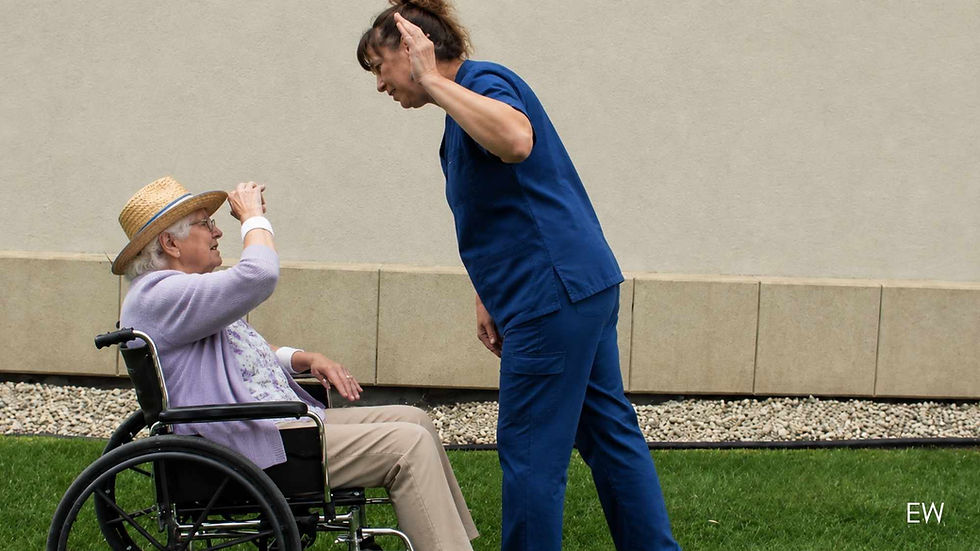
My Fear of Elder Abuse Is Real
Money isn’t my only concern.
I’m afraid of elder abuse.
I’m afraid of being neglected, spoken to badly, left sitting in dirty clothes, given the wrong medicine, handled roughly, or ignored because no one believes anybody will come looking for answers.
Older adult abuse can include physical harm, emotional abuse, neglect, sexual abuse, and the misuse of a person’s money or property.
The CDC reports that about one in ten older adults living at home experiences abuse, neglect, or exploitation, and many cases are never reported because the person may be afraid or unable to tell anyone.
That is hard for me to read.
It is even harder when I imagine being an older woman with no regular visitor.
Someone with involved family may have a daughter who notices a bruise.
A husband may question missing money.
A friend may realize she suddenly seems frightened or unusually quiet.
But if no one knows our normal behavior, who notices when something changes?
A facility may have rules, inspections, care plans, and official ratings.
Those things matter.
Nursing home residents also have the right to take part in their care planning or have someone act on their behalf.
Still, a form can’t love us.
A rating can’t recognize the look on our face.
An inspection can’t replace a person who knows that something isn’t right.

Having Support Is a Blessing
I hope women who have loving spouses, close children, trustworthy relatives, old friends, or caring neighbors understand what a blessing that is.
I don’t say that to shame anyone or suggest every family relationship is healthy.
Having relatives doesn’t automatically mean having support.
Some women are surrounded by people and still feel completely alone.
But real support matters.
A person who checks on us matters.
A person who knows our wishes matters.
A person who is willing to ask hard questions matters.
We sometimes take that kind of care for granted because it feels ordinary while we have it.
It isn’t ordinary for everyone.
Some of us are looking toward the future without a name to place under emergency contact.
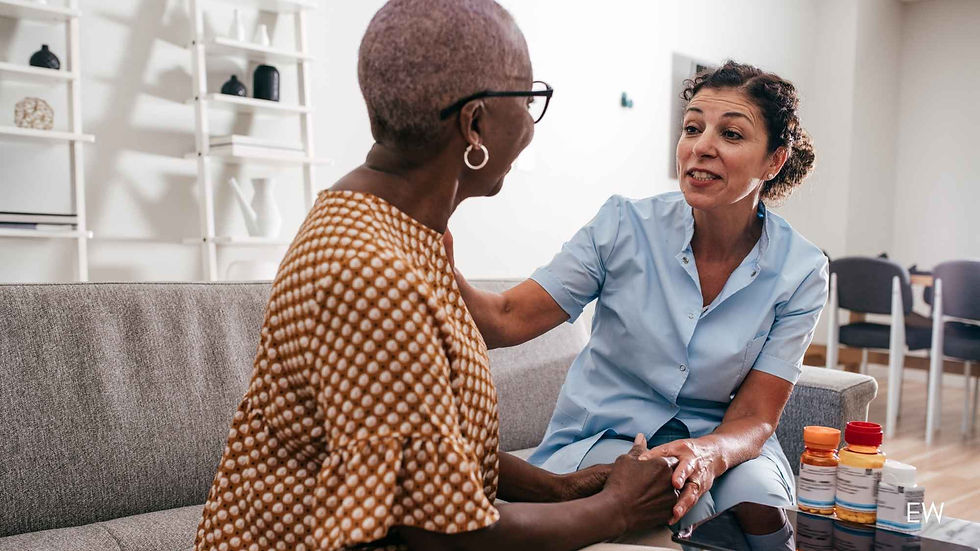
Maybe I Need to Build Protection Differently
I don’t have a perfect answer for this.
I’m not going to pretend that making a few phone calls will remove every risk.
It won’t.
But I’m beginning to understand that I may need to build protection in a different way.
That could mean learning more about legal documents that explain my wishes.
It could mean choosing someone I trust to speak for me if I can’t speak for myself.
It may mean learning about local services, visiting facilities before I need them, keeping records organized, or developing stronger relationships with neighbors and women in my community.
It may also mean knowing that every state has a Long-Term Care Ombudsman program that works to resolve problems involving the health, safety, rights, and treatment of people living in nursing homes, assisted living facilities, and similar communities.
There are also programs in some areas that help eligible older adults receive nursing home level support while continuing to live in the community.
The Program of All Inclusive Care for the Elderly, often called PACE, is one example, although it isn’t available everywhere and has specific requirements.
Knowing these things doesn’t make me feel completely safe.
But not knowing made me feel even less safe.
I Don’t Want Fear Making Every Decision
I have to be careful not to let this concern steal the years I’m living now.
I don’t want to spend today grieving a future that hasn’t happened.
At the same time, I don’t want to look away because the subject is frightening.
There has to be room for both truths.
I can enjoy the independence I have today and still prepare for the possibility that I may need help later.
I can be grateful for my quiet home and still admit that sometimes the quiet makes me wonder who would hear me if I needed someone.
I can be strong and still want protection.
I can accept growing older without pretending I’m comfortable with every part of what may come.
Maybe the real question isn’t whether someone will eventually come and save me.
Maybe it is whether I can begin building enough information, connection, and protection now that my older self won’t be left completely without a voice.
I’m still working through that.
For now, I’m still living my life.
I’m enjoying my home, making my own decisions, and appreciating the independence I have today.
But I’m also paying attention to the woman I may become years from now.
She may need more help than I need today.
She may be afraid.
She may need someone to speak when her own voice isn’t being heard.
I don’t want to wait until she is powerless to start caring about what happens to her.
She is still me.
And she deserves to be protected.


Comments