_edited.png)
.png)
%20(3000%20x%201000%20px)%20(100%20x%2050%20px)%20(1).jpg)
Is It Love or Attachment? The Truth That Can Change How You See Relationships
- Maya Ellis

- Jun 5
- 7 min read
Updated: Jul 7

There was a time in my life when I thought I knew what love was supposed to look like.
I thought love meant staying and fighting for a relationship even when it was draining me.
And if I’m being honest, I spent a lot of years confusing love with attachment.
In romantic relationships and friendships too.
I’ve cared deeply about people who didn’t always care for me in the same way.
I’ve defended people who hurt me.
I’ve made excuses for behavior that left me feeling small.
I’ve given chances long after my peace had already started begging me to stop.
I told myself I was loyal.
I told myself I was patient.
I told myself I was the kind of woman who didn’t give up on people.
But now that I can look back with clearer eyes, I can admit something I couldn’t admit then.
Some of what I called love was really attachment.
That truth can be hard to sit with, because attachment doesn’t always feel unhealthy while we’re in it.
Sometimes it feels familiar.
Sometimes it feels comforting.
Sometimes it sounds like, “I’ve been through too much with this person to walk away now.”
But the older I get, the more I understand that love and attachment are not the same thing.
They can look alike from the outside, but they don’t come from the same place.

Love and Attachment Are Different
Attachment is a normal part of being human.
We attach to people, routines, memories, dreams, and even old versions of ourselves.
We get used to people being in our lives.
We get used to the role they play.
We get used to the comfort, the attention, the connection, or the hope we feel when we’re around them.
Attachment by itself isn’t bad.
The problem starts when our attachment becomes stronger than the truth.
That’s when we hold on to who someone used to be instead of paying attention to who they are now.
That’s when we replay the good moments while ignoring the pattern that keeps breaking our heart.
That’s when we become more attached to the idea of the relationship than the reality of it.
Love says, “I care about you.”
Attachment says, “I need what you give me.”
Love can care deeply and still see clearly.
Attachment can care deeply and still keep us blind.
That’s the part many of us miss.
We think because we feel strongly, it must be love.
But intensity isn’t always love.
Longing isn’t always love.
Missing someone isn’t always love.
Feeling scared to lose someone isn’t always love.
Sometimes it’s our heart clinging to what feels familiar, even when familiar is painful.

What Love Really Looks Like
The older I get, the more I believe healthy love is much calmer than I once thought.
It’s not always loud.
It’s not always dramatic.
It’s not always those big emotional highs and lows that make us feel like something powerful is happening.
Sometimes real love feels peaceful.
It feels safe enough to be honest.
It feels steady enough to be yourself.
It feels respectful enough to have hard conversations without someone punishing you for having feelings.
Love is not possession, control, or someone needing you to shrink so they can stay comfortable.
Love doesn’t require you to prove your worth over and over again.
Healthy love leaves room for two whole people.
It doesn’t make one person disappear so the other person can feel secure.
When I think about the healthiest relationships in my life, I don’t think about perfection.
I think about respect, care, truth, and the freedom to breathe.
Love shows up in consistency.
It shows up in listening.
It shows up in accountability.
It shows up in the way someone handles our boundaries.
It shows up in whether we feel more like ourselves around them, not less.
And I’ve learned that real love doesn’t need me to beg for basic kindness.
It doesn’t need me to keep explaining why something hurt.
It doesn’t need me to abandon myself just to keep the relationship standing.
Love may challenge us, but it shouldn’t constantly confuse us.
What Attachment Looks Like
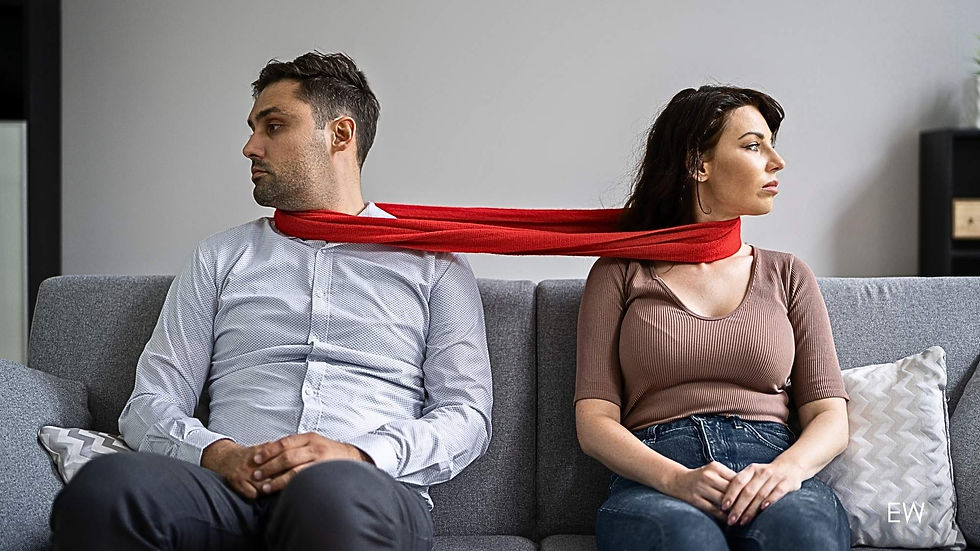
Attachment can be sneaky because it often hides behind good words.
Loyalty.
History.
Commitment.
Family.
Friendship.
Hope.
But underneath those words, there may be fear.
Fear of being alone.
Fear of starting over.
Fear of losing what we thought the relationship would become.
Fear of admitting we stayed too long.
Fear of facing the empty space someone will leave behind.
I’ve had relationships and friendships where I stayed connected long after I knew something wasn’t right.
I wasn’t always staying because I felt loved.
Sometimes I was staying because I was attached to the version of them I wanted to believe in.
I was attached to the potential.
I was attached to the memories.
I was attached to the apology I kept hoping would finally come with real change.
I was attached to the feeling of being chosen, even if I wasn’t being cherished.
And that’s where many of us get stuck.
We don’t always stay because things are good.
Sometimes we stay because leaving would force us to grieve not just the person, but the dream we built around them.
So we keep waiting.
We wait for them to understand.
We wait for them to treat us better.
We wait for them to become who they were in the beginning.
We wait for the friendship to feel mutual again.
We wait for the marriage to feel safe again.
We wait for the relationship to stop costing us our peace.
And sometimes we call that waiting love.
But sometimes it’s attachment.
Attachment says, “Maybe if I hold on longer, this will finally become what I need.”
Love says, “I can care about this person and still tell myself the truth.”

The Difference You Can Feel
One of the biggest differences between love and attachment is how they feel inside your body.
Love may have challenges, but it doesn’t keep you in a constant state of panic.
Attachment often does.
Attachment makes you overthink every text, every tone, every pause, every change in energy.
Attachment makes distance feel like danger.
Attachment makes you chase reassurance.
Attachment makes you feel responsible for keeping everything together, even when the other person is barely helping you hold it.
Love feels different.
Love gives room.
Love allows honesty.
Love respects individuality.
Love doesn’t make you perform to be kept.
Love doesn’t collapse every time conflict shows up.
That doesn’t mean healthy love never hurts.
We’re human.
Feelings get messy.
Relationships take patience, communication, forgiveness, and growth.
But healthy love doesn’t ask one person to carry the whole emotional weight.
Healthy love doesn’t make peace feel impossible.
Healthy love doesn’t make your needs feel like a burden.
And this is where self-respect becomes important.
Self-respect asks the questions attachment tries to avoid.
Am I staying because I feel loved here?
Or am I staying because I’m afraid to let go?
Am I being valued?
Or am I attached to being needed?
Am I growing in this relationship?
Or am I shrinking to keep someone else comfortable?
Am I at peace?
Or am I addicted to the moments when things finally feel good again?
Those questions changed me.
They didn’t make every decision easy, but they helped me stop lying to myself.
Can Love and Attachment Exist Together?
Yes, love and attachment can exist together.
Most real relationships have both.
When we love someone, we naturally become attached to them.
We miss them.
We care about their presence.
We build memories with them.
We create routines with them.
We feel their absence when they’re gone.
That’s normal.

The goal is to notice when attachment starts leading the relationship more than love does.
When fear becomes louder than truth.
When need becomes stronger than care.
When holding on becomes more important than being honest.
When we’re more afraid of losing the relationship than we are of losing ourselves.
That’s when we have to pause.
Because love should help us grow.
It should make room for who we’re becoming.
It should give us space to be honest about what’s working and what’s not.
Unhealthy attachment often does the opposite.
It keeps us waiting.
It keeps us explaining.
It keeps us hoping.
It keeps us accepting crumbs because we remember when we once had the whole meal.
And I say that with compassion, because I know what it feels like to want something to work so badly that you keep trying to make the truth less painful.
But real love doesn’t require us to disappear.
Real love doesn’t ask us to keep choosing someone who keeps making us feel unseen.
Real love doesn’t need us to lose our voice, our peace, or our sense of self in order to keep it alive.
Sometimes the most loving thing we can do for ourselves is admit the difference.
Not because it makes letting go easy.
But because it makes the truth clearer.
I think many of us have called something love when it was really attachment.
I know I have.
And I don’t say that with shame anymore.
I say it with understanding.
Because sometimes we’re holding on to the feeling of being wanted.
Sometimes we’re holding on to the memory of who someone used to be.
Sometimes we’re holding on because we’re tired, scared, lonely, or not ready to start over.
And that doesn’t make us weak.
It makes us women who have loved, hoped, invested, endured, and tried.
But at some point, we have to ask ourselves a deeper question.
Is this love helping me become more whole?
Or is this attachment keeping me stuck in a place I’ve outgrown?
That question alone can open our eyes.
The more I’ve learned to value myself, the easier it has become to tell the difference.
Not perfectly.
Not every time.
But enough to know that love and attachment are not the same thing.
Love can care and still be free.
Attachment often clings and calls it care.
And sometimes understanding that difference is the first step toward choosing ourselves again.


Comments